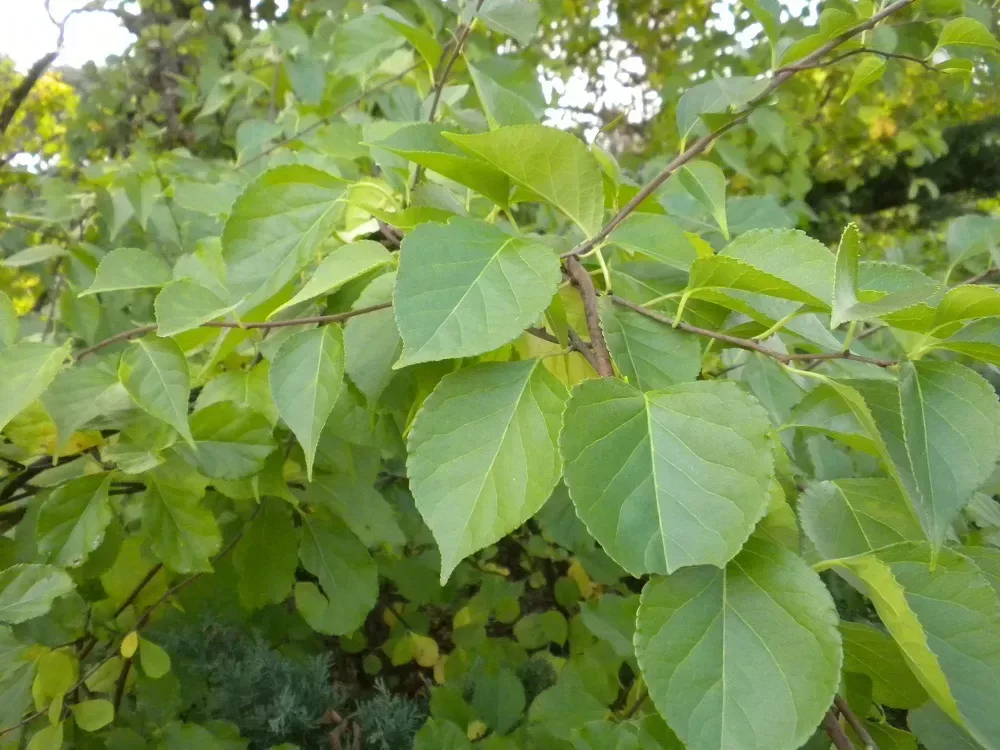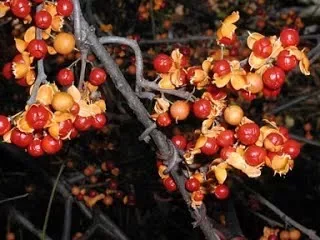


Oriental, or asiatic, bittersweet is a perennial, deciduous vine that can grow up to 60 ft. Its stems have dark brown, striated bark. The alternate leaves are elliptic to ovate, and spiral evenly around the stem. Axillary flowers bloom in May to early June yielding bright, reddish-orange fruit in the fall. Oriental bittersweet can be confused with american bittersweet, a native species, which has terminal inflorescence and orange capsules.
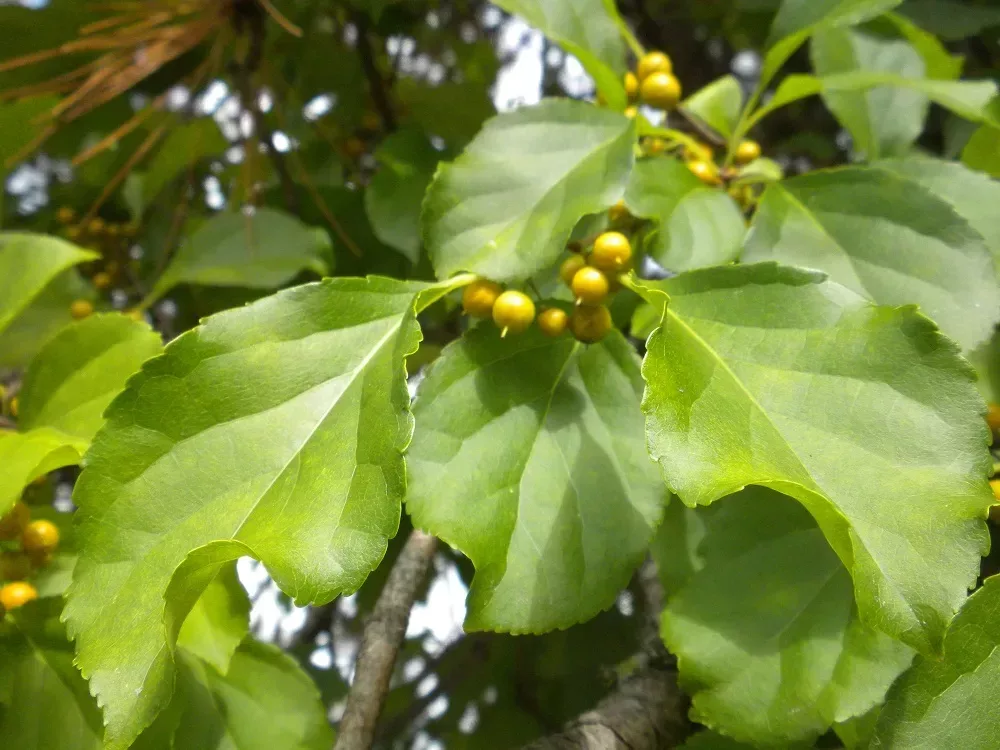

Oriental bittersweet grows most profusely in the sun but can tolerate dense shade. It grows in disturbed woodlands, fields and roadsides.


This plant causes major damage to native plants through girdling. Mechanical damage of trees and other plants is also caused by additional weight to the branches.
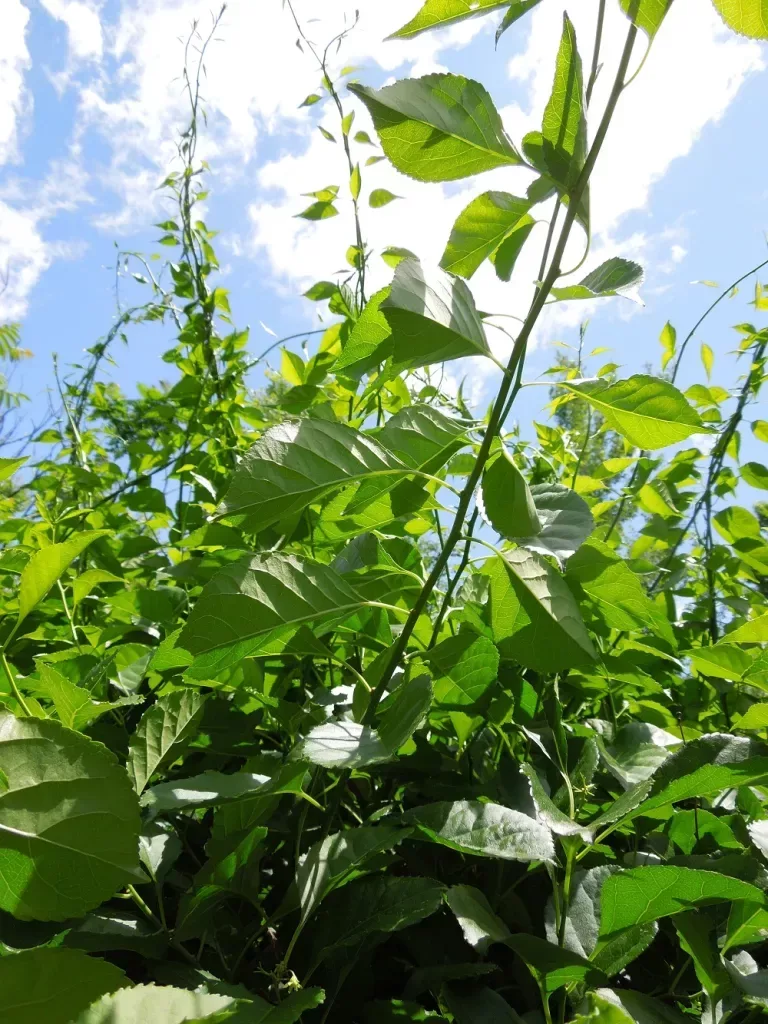


Oriental bittersweet was introduced to North America as an ornamental plant in the mid 19th century.