
Introduced to the US as an ornamental plant in the early 19th century
Impact
Outcompetes and shades out native plants.
Background
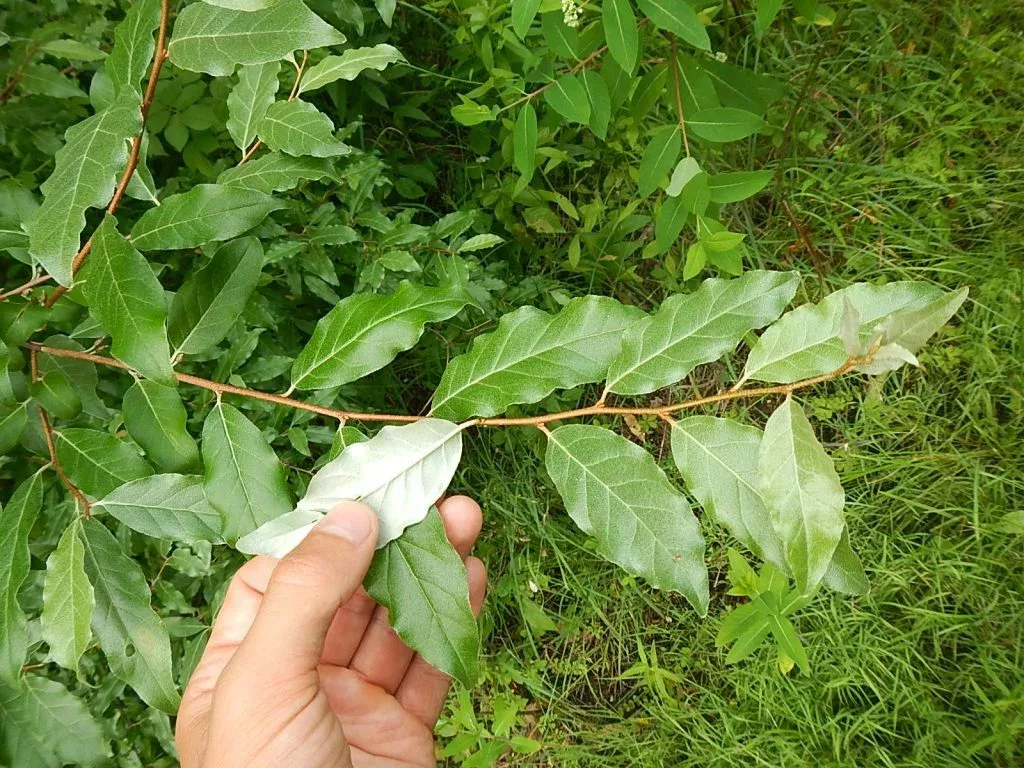
Autumn olive is a large deciduous shrub that can grow to a height of 15 ft, and a width of 20 ft. Its dull green leaves are oval, or lance-shaped, with entire, wavy margins and silvery undersides. Autumn olive flowers in the early summer. Mature shrubs produce dense clusters of bright red berries.
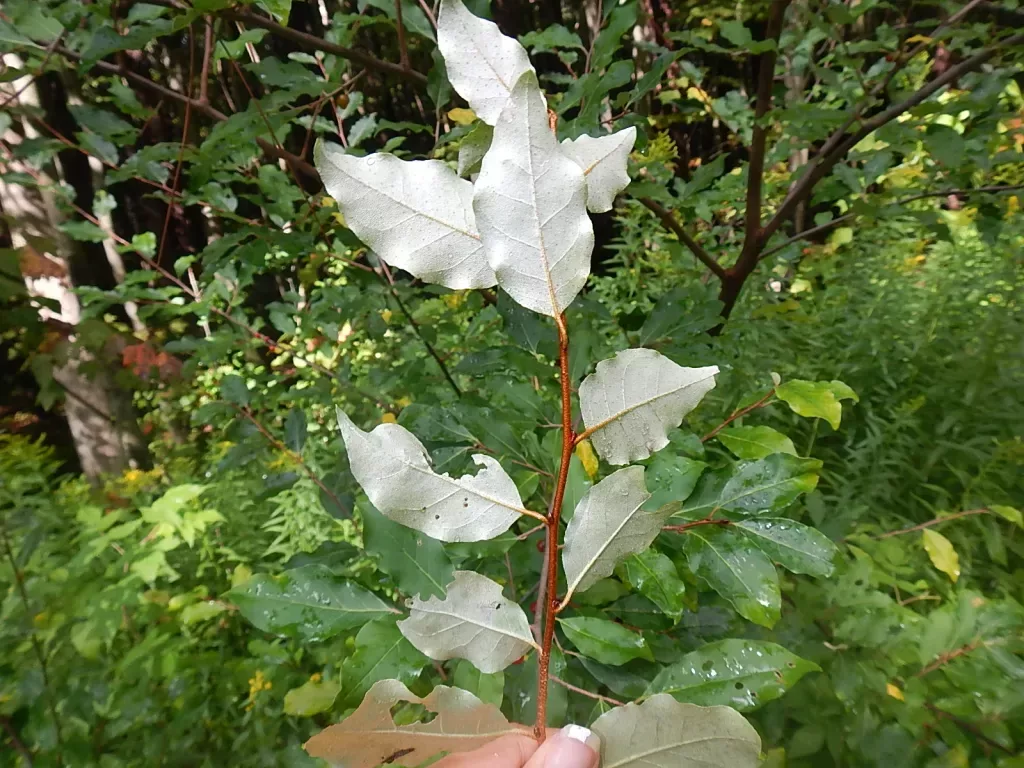
Autumn Olive, Elaegnus umbellata, Silvery underside, Photo by WNY PRISM
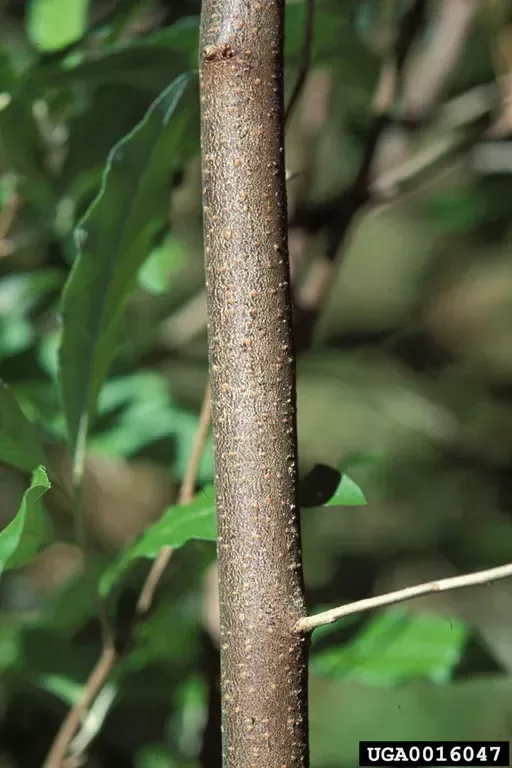
Elaeagnus umbellata ID Bark, Photo Credit: James H. Miller, Bugwood.org
Habitat
Autumn olive is drought-tolerant and can be found in grasslands, open woodlands, forest edges and other disturbed areas.
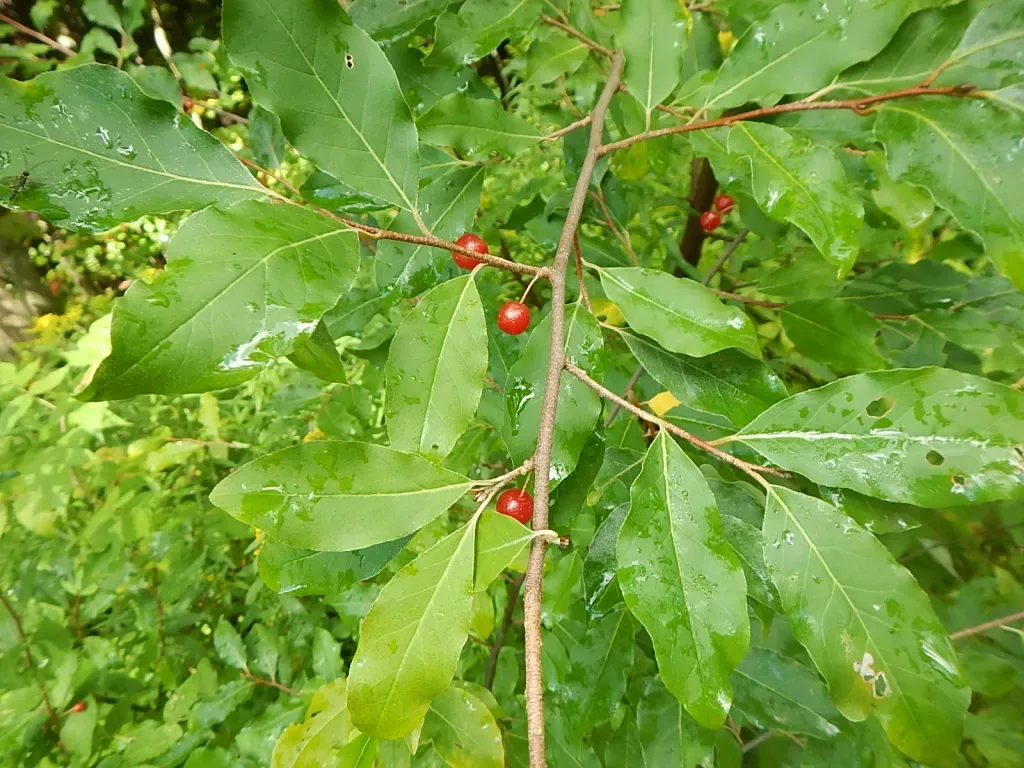
Autumn Olive, Elaegnus umbellata, Berries, Photo by WNY PRISM
Impact
Autumn olive outcompetes and shades out native plants. It hosts nitrogen-fixing bacteria in its root nodules, similar to a legume, allowing it to grow in even the least fertile soils. Its nitrogen-fixing ability can also alter soil composition and disrupt normal nutrient cycling. A single shrub can produce 200,000 seeds in one year. Its berries are very attractive to birds, which help the seeds disperse.
Management
Seedlings can be hand pulled. Larger trees may be cut and have herbicide applied to the stump. Follow-up treatments may be necessary.
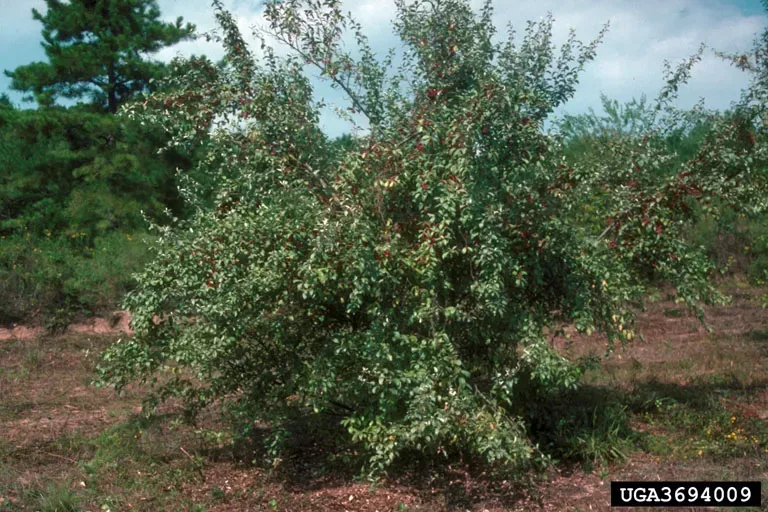
Elaeagnus umbellata ID, Photo Credit: James R. Allison, www.bugwood.org